Searching for the brightest flashlight usually starts with one number: lumens. That makes sense until you buy a tiny light promising 10,000 lumens, use it for five minutes, and discover it gets hot, drains its battery, or throws a wide white blob instead of a useful beam. The better question is what kind of brightness you need, how long you need it, and whether you can carry the thing comfortably.
I have owned enough flashlights to learn that maximum output is often a party trick. For a suburban power outage, dog walk, roadside emergency, or weekend trail, a well-designed 1,000- to 2,000-lumen light can be more useful than a bulkier model with a larger headline number. Buy the version you will still like after the excitement wears off.
The three things that actually matter
First, look at usable brightness rather than the advertised peak. Peak lumens describe the highest output, often for a short burst with a fully charged battery. A flashlight rated at 2,000 lumens may quickly step down to 600 or 800 lumens to control heat. That is not necessarily a flaw. It is normal thermal management. The important detail is how long the light can maintain a useful level.
Second, study the beam pattern. A narrow, focused beam reaches farther and works well for checking a fence line or spotting trail markers. A wider beam lights a driveway, garage, or campsite more evenly. The brightest flashlight on paper can still feel weak if the beam does not match the job.
Third, consider the battery and controls. Rechargeable USB-C models are convenient for a desk drawer or car console, while replaceable 18650 or 21700 batteries suit people who use a flashlight regularly and do not want to wait for charging. A clear side switch is better than cycling through six modes every time you need basic light.
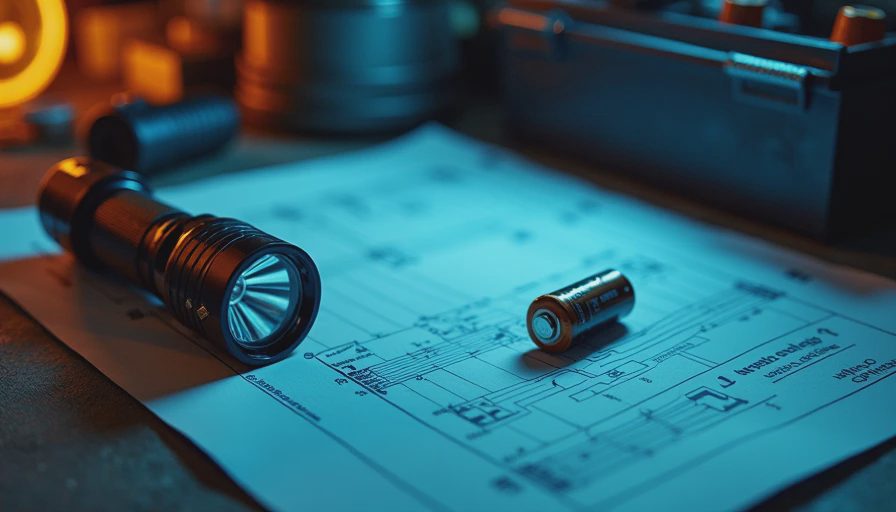
How many lumens do you really need?
For household use, 300 to 700 lumens is usually enough. That range can illuminate a breaker panel, help locate a dropped item under furniture, or guide you across a dark backyard without turning the scene into a stadium. It also tends to produce less heat and better battery life.
Between 800 and 1,500 lumens is the practical sweet spot for many buyers. This level handles evening walks, car trouble, storm outages, and general outdoor work. Models such as the Fenix PD36R Pro, Streamlight Protac HL-X, and Olight Warrior 3S occupy different price and design positions, but each shows why a good reflector, switch, and battery can matter as much as the lumen rating.
Above 2,000 lumens makes sense for large properties, search work, serious outdoor use, or anyone who needs to briefly flood a broad area. It usually brings more weight, heat, charging demands, and cost. If your regular scenario is taking trash cans to the curb, that tradeoff is mostly expensive pocket furniture.
The brightest flashlight is not always the best flashlight
A light that produces 5,000 lumens for 30 seconds sounds impressive, but it may be less useful than a 1,200-lumen model that stays comfortable and bright for a longer walk. Runtime charts are especially important here. Look for the regulated output, not just the turbo mode, and check whether the manufacturer explains step-down behavior.
Heat also changes the experience. High-output aluminum bodies can become uncomfortable in your hand within minutes. Some models include cooling fins or a larger body to spread heat, but that increases bulk. A compact light is easier to store in a kitchen drawer; a larger light is often easier to hold and may support a bigger battery. Neither is automatically better.
Water resistance is another quiet specification worth reading. An IPX8 rating generally indicates protection during deeper or longer water exposure than an IPX4 rating, which is designed for splashes. You do not need extreme protection for every use, but rain, a wet glove, and an accidental puddle are common ways cheap lights reveal their limits.

Three buying paths for normal households
If you want an everyday carry light, choose something around 500 to 1,200 lumens, under six inches long, with USB-C charging and a simple low mode. A pocket clip and a tail switch are more valuable than a dramatic turbo number. The Nitecore EDC27 and Streamlight MicroStream USB represent different sizes and price points, but both focus on portability.
For a car emergency kit, favor reliability and long storage life. A rechargeable model is convenient if you remember to top it up, while a light using common AA batteries can be easier to revive after months in a glove box. Keep spare batteries in a sealed bag, and avoid leaving lithium-ion cells loose beside coins or keys.
For property checks or outdoor work, step up to a larger light with a 1,500-lumen-or-higher turbo mode, a stable grip, and a battery indicator. A throw-focused model helps across a field, while a flood-oriented light is better for a work area. This is where the brightest flashlight becomes a tool choice rather than a shopping contest.
What to skip when the price looks too good
Be skeptical of marketplace listings that promise 50,000 or 100,000 lumens from a tiny light powered by one small battery. That combination is physically difficult to sustain, and the listing may be measuring theoretical LED output instead of real flashlight output. Inflated claims are common enough that brand reputation, independent testing, and a clear runtime chart deserve real weight.
Also skip lights with vague charging hardware, fragile rubber ports, or proprietary batteries that cost nearly as much as the flashlight. A $20 light can be a fine backup, but it is a poor bargain if the battery is unavailable next year. Spending $50 to $120 on a reputable model often buys better regulation, safer charging, stronger switches, and parts support.
Do not ignore the user interface. Some flashlights start in turbo mode, while others force you through strobe before reaching low brightness. Try to find a review that describes the button sequence. The brightest flashlight is frustrating if turning it on at 2 a.m. wakes everyone in the house.
My practical recommendation
If I were buying for myself today, I would choose a rechargeable flashlight around 1,000 to 2,000 advertised lumens, with USB-C charging, a protected battery, a useful low mode, and a beam that balances throw with flood. I would pay more for a dependable switch and honest runtime before paying extra for another thousand peak lumens.
For most American households, the best setup is actually two lights: a compact 500-lumen model in a drawer or backpack, plus a larger rechargeable light in the car or emergency bin. That costs less than chasing one extreme flashlight and gives you the right size for everyday errands and serious outages.
Before checkout, ask three questions. Will I carry it or leave it stored? Do I need distance, wide coverage, or both? Can I recharge it easily six months from now? Those answers narrow the field faster than scrolling through hundreds of glowing product photos.
The right brightest flashlight is the one that produces enough usable light, lasts through the job, and does not annoy you every time you use it. If the answer is a $35 compact light, buy that. If you work outdoors after dark, spend more on regulation and battery capacity. The goal is not to win a lumen argument; it is to see clearly when the power is out, the road is dark, or something in the backyard makes an unexpected noise.
No comments yet — be the first to share a thought.