
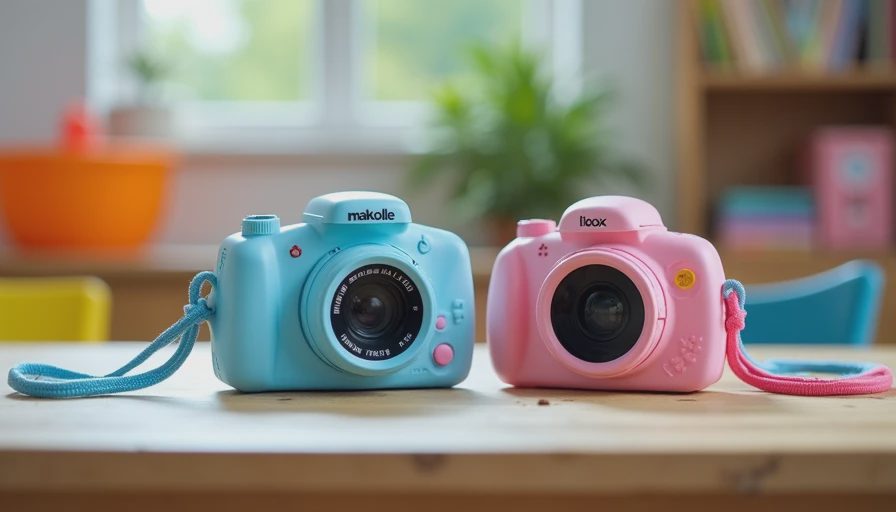
If a kid in your house keeps borrowing your phone to photograph the dog, the sidewalk, or their own thumb, you’re probably looking at kids’ digital cameras. Two of the most visible budget options right now are the Makolle S9 (the one with the flip lens) and the Desuccus X2-style camera that shows up frequently in Amazon search results for “kid camera.”
Both sit in the same basic category: soft plastic bodies sized for small hands, simple buttons, included memory cards, frames and filters, and prices that don’t require a second thought. They are not real cameras in the adult sense. They are tools that let a child own the act of taking pictures without draining your phone battery or filling it with 400 nearly identical photos of the ceiling.
Here are the three practical differences that actually matter when you’re deciding between them.
1. The Flip Lens Changes How Kids Use the Camera
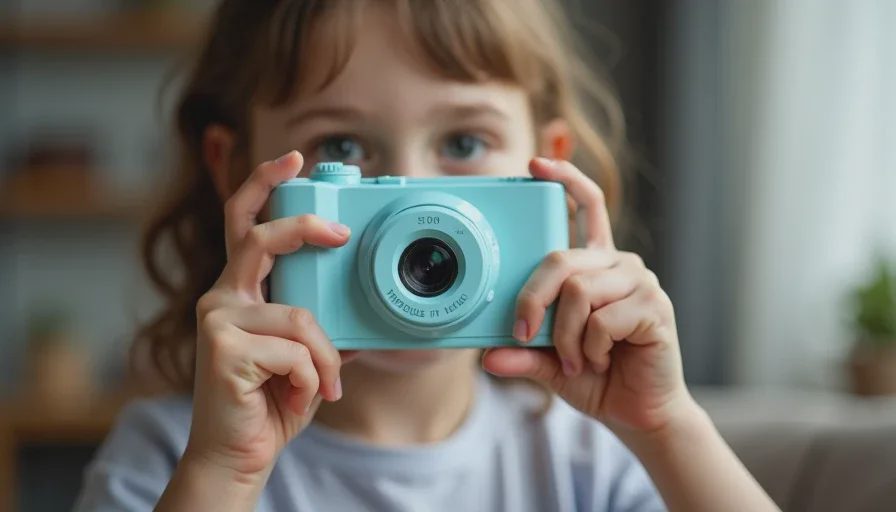
The Makolle S9’s standout feature is a lens that flips a full 180 degrees. Instead of a separate, usually weaker front camera for selfies, the same main lens rotates so the child can see themselves on the screen. In practice this means the image quality of a selfie and a regular shot comes from the same hardware. For kids, selfies are a huge part of the fun. A dedicated flip design removes the common frustration of cheap dual-camera setups where the front camera looks noticeably worse.
The Desuccus model does not have this. It is a conventional fixed-lens design with digital zoom. Kids can still take pictures of themselves by turning the whole camera around, but the experience is less fluid and the results are typically lower quality because you’re either guessing the frame or relying on a secondary sensor if one exists.
If the child in question is already obsessed with faces, selfies, or “look at me” shots, the flip lens on the Makolle is the clearer advantage. It is the single biggest functional difference between these two cameras. For a full photographer’s hands-on take on how that flip lens actually performs with real kids, the build quality, and the honest limits of the image quality, you can read the detailed review here: Makolle S9 Flip-Lens Kids Camera review.
2. Creative Features vs. Games: What Keeps Them Engaged Longer
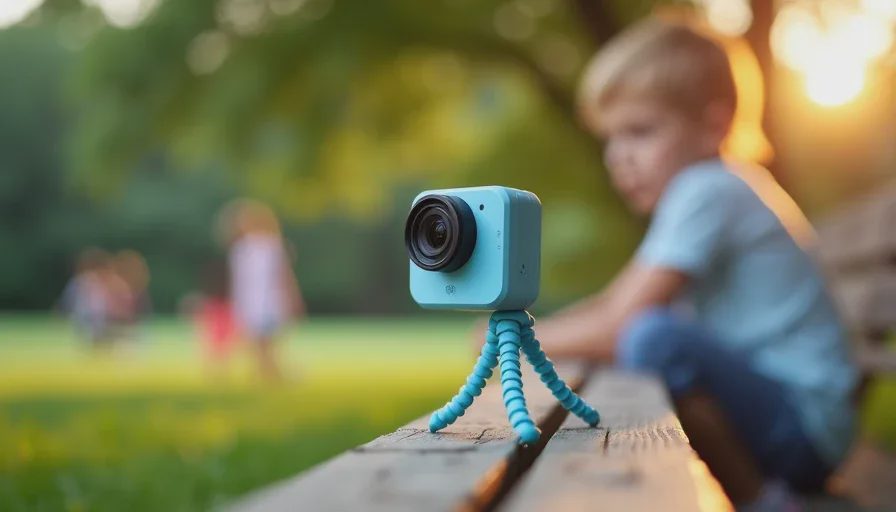
Both cameras come loaded with the expected kid-camera toolkit: photo frames, color filters, burst mode, and a self-timer. The Makolle adds stickers, a time-lapse mode, and a basic MP3 player. The time-lapse feature, paired with the small flexible tripod that comes in the box, is surprisingly useful. Kids can point it at a plant, a melting ice cube, or clouds and watch something slow become fast. That is one of the better low-effort introductions to how photography works.
The Desuccus leans harder into games. It includes several built-in puzzle-style games (snake, maze, and similar) in addition to frames and filters. For some kids this is a plus—it turns the camera into a multi-purpose toy that can occupy them when they are not actively shooting. For others it dilutes the “this is a camera” feeling and can become a distraction from actually taking pictures.
Battery claims are similar in the marketing (roughly 2–4 hours of mixed use), and both include a 32GB card so they are ready out of the box. Real-world endurance depends on how much video, screen time, and games the child uses. Neither will last a full day of heavy continuous shooting without a recharge, and both charge over USB-C.
If the goal is primarily photography and light creative play, the Makolle’s time-lapse + tripod combination edges ahead. If you want something that can also function as a simple electronic toy with games when interest in picture-taking dips, the Desuccus has the edge.
3. Price, Build, and Realistic Expectations
At typical street prices the Desuccus is usually the cheaper of the two, often landing closer to the $20 range while the Makolle sits nearer $30–35 (sometimes discounted). Both use soft-touch, shock-resistant plastic with rounded edges and a lanyard. Neither is waterproof. Both will survive the normal drops and knocks of preschool and early elementary use better than a phone will.
Image quality on both is exactly what you should expect at this price: bright and cheerful in good daylight, soft and noisy indoors or in low light, and limited by digital zoom that softens the image the more you push it. Neither has a useful flash. Close-up “bug and flower” shots are usually disappointing because minimum focus distance is not macro-friendly. These limitations do not bother most children. They do bother adults who inspect the files.
Both cameras transfer photos the old-fashioned way—pull the card and use the included reader. There is no Wi-Fi or app, which is a feature for many parents who want to keep the experience offline and simple.
Who each one suits best
Choose the Makolle S9 if the child is likely to take a lot of selfies, if you value the flip-lens design, and if you like the idea of time-lapse experiments with the included tripod. It feels slightly more focused on being a camera first.
Choose the Desuccus if budget is tighter, if built-in games will extend the toy’s useful life, or if you simply want a competent, no-frills starter camera that a 4- to 8-year-old can figure out in under a minute.
Neither is a “grow-with-you” camera. Both are first cameras—something a child can own, drop, decorate with frames, and use to look at the world for a while before they eventually move on to a phone or a more capable point-and-shoot. That is the actual job these products need to do.
If you want the deeper, photographer-tested perspective on the Makolle’s real-world image quality, handling with small hands, and which kids actually keep using it, the full review is worth reading before you decide. For most families shopping in this exact price band, the flip lens is the clearest reason to spend the extra few dollars on the Makolle. If that feature does not matter to your kid, the Desuccus gets the same basic job done for less.

No comments yet — be the first to share a thought.