
The nikon s9900 is the kind of camera that looks almost perfectly suited to a family trip: small enough for a jacket pocket, equipped with a remarkably long zoom, and less intimidating than a modern interchangeable-lens setup. It is also an older compact camera, which changes the buying decision. If you find one for a sensible used price, it can still be useful. If the seller wants premium money, the math gets uncomfortable fast.
My short version is simple: buy the nikon s9900 for its reach and convenience, not for cutting-edge image quality. The three things that actually matter are the 30x optical zoom, the camera's age, and whether you need dependable phone-like sharing. Get those right, and this can be a fun travel companion. Ignore them, and you may end up with an expensive drawer ornament.
1. The zoom is the reason to buy it
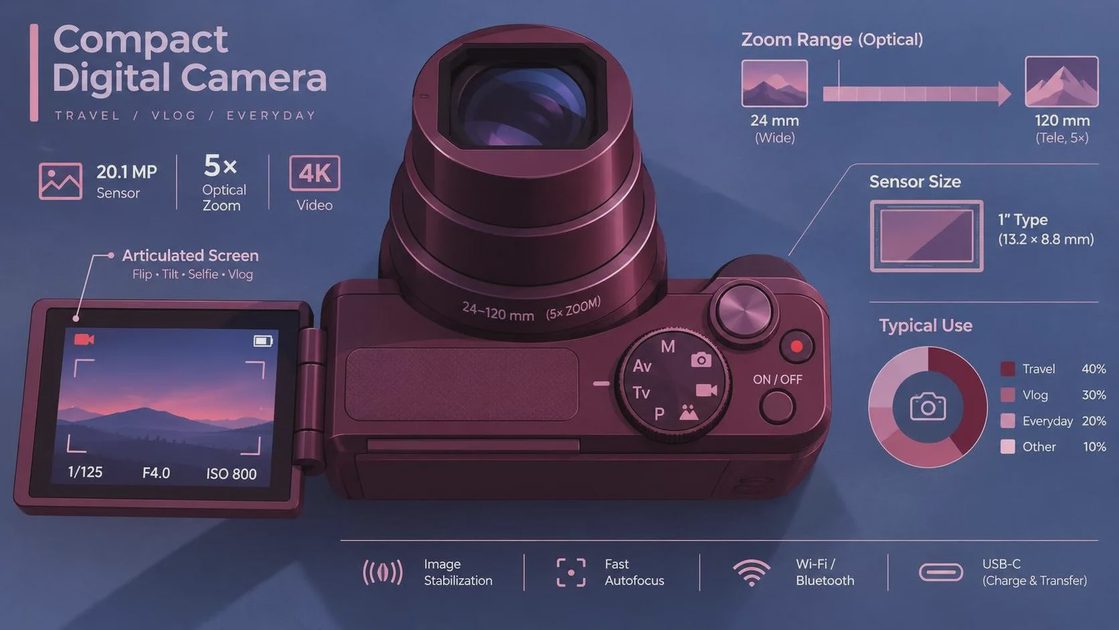
The headline feature is the 25-750mm-equivalent optical zoom. In normal-person language, that means the camera can cover a wide family group shot and then frame a distant landmark, stage performer, or bird without changing lenses. That is the nikon s9900's strongest argument in 2025: not ultimate detail, but having one small camera that can reach surprisingly far.
The lens also has vibration reduction, which helps reduce blur caused by hand movement. It cannot freeze a running child or compensate for a dark indoor room, but it is valuable outdoors in daylight. At a soccer game, on a trail, or from the back row of a sightseeing boat, the reach is genuinely more useful than the modest sensor specifications suggest.
There is a practical catch. Long zoom cameras are easiest to use at the wide end and in bright light. At 750mm equivalent, even a small hand movement becomes obvious, and the lens is not especially bright. You will need steady hands, good timing, and sometimes a nearby railing. This is reach, not magic.
2. Image quality is fine until the light gets difficult
The nikon s9900 uses a small 16-megapixel back-illuminated CMOS sensor. In daylight, it can produce pleasant photos for social media, email, small prints, and a family photo book. Colors are generally attractive, and the camera gives you more framing flexibility than most phones from its era.
The trouble starts indoors, at dusk, or under heavy tree cover. Small sensors collect less light than the larger sensors found in mirrorless cameras and many newer smartphones. The camera may raise its ISO setting, producing softer detail and visible grain. Faces at a birthday dinner can look smeared if the room is dim and the subject is moving. A newer iPhone or Google Pixel will usually handle that situation more confidently.
This does not make the camera bad. It makes the use case specific. Think of it as a daylight travel camera with a long lens, not a low-light portrait specialist. If your favorite photos happen after sunset, a phone with strong computational photography or a larger-sensor camera is the better starting point.
3. Its age matters more than the spec sheet
Nikon introduced the nikon s9900 in 2015. That makes battery condition, buttons, screen behavior, lens movement, and storage compatibility more important than the original retail feature list. A used camera can look clean and still have a tired battery, sticky zoom control, or a lens that refuses to extend consistently.
Before paying, test every major function. Turn the camera on several times. Zoom from wide to telephoto and back. Take photos at both ends of the range. Check the rear display for dead areas, inspect the battery compartment for corrosion, and confirm that the flash opens and fires. Move the articulating screen through its range without forcing it. Try video recording and playback, then remove and reinsert the memory card.
The original battery is the EN-EL12, and replacement batteries are widely available from third-party sellers. A spare may cost roughly $15 to $30, depending on the brand. That is a reasonable maintenance expense, but it should be part of your purchase calculation. A camera listed at $110 is not really a $110 deal if it immediately needs a battery, charger, and memory card.

What the nikon s9900 feels like in daily use
The body is compact, but the long lens gives it a useful purpose that a basic point-and-shoot often lacks. The rear screen flips and tilts, which helps with low-angle photos, overhead shots, and selfies without asking everyone to crouch in the grass. Built-in Wi-Fi and NFC were also forward-looking features when the camera launched, although wireless setup can feel slower and less dependable than sending a photo from a current phone.
Controls are approachable. You do not need to understand aperture charts to start taking pictures, and the automatic modes handle routine snapshots well. That is a benefit for a parent trying to photograph a child before the moment disappears. The camera is also less precious than an expensive mirrorless body, so tossing it into a padded day bag feels relatively low-stress.
The downside is response speed. Autofocus and startup are adequate rather than instant, especially when the lens is extended or lighting is poor. If Miles were running toward me across a park, I would use a phone for quick shots and reserve this camera for distant, predictable subjects. It rewards anticipation more than frantic button pressing.
Price: when is it a sensible buy?
Used pricing moves around, but a working nikon s9900 with a battery and charger is easier to justify around the $100 to $180 range. Clean examples with accessories can command more, while heavily worn units should be discounted. At $250 or above, I would pause and compare it with newer used compact cameras, refurbished phones, or an entry-level bridge camera.
Condition matters more than the box. A missing original cable is not automatically a deal breaker, but a damaged lens barrel is. Scratches on the exterior are cosmetic; a display that flickers, a flash that does not fire, or a zoom that grinds is not. Ask for sample photos taken at wide and telephoto settings, because a seller's old product photo tells you almost nothing about current performance.
Also budget for a simple case, SD card, and spare battery. Those extras can add $30 to $60, but they make the camera easier to carry and less likely to fail halfway through a weekend trip. The cheapest listing is rarely the cheapest complete setup.
Who should buy it, and who should skip it?
Buy the nikon s9900 if you want a pocketable camera for daylight travel, wildlife at modest distances, school events, or casual outdoor photography. It makes sense for someone who values optical zoom and physical controls more than the cleanest night photos. It can also be a good inexpensive learning camera for a child or beginner, provided the adult buyer checks the condition carefully.
Skip it if your priority is indoor family photography, fast action, reliable wireless sharing, or sharp images for large prints. A newer phone will often be more convenient, while a used Sony RX100, Panasonic ZS series model, or modern bridge camera may provide a stronger overall experience if your budget reaches $250 to $500. Those alternatives are not automatically better in every way, but they deserve a comparison before you overpay for an old compact.
If I were buying this for myself today, I would purchase the nikon s9900 only from a seller with clear condition details, sample images, and a return window. At a fair price, it is a charming little travel zoom. At collector-level pricing, it becomes a nostalgia purchase. Buy the version you will still like after the excitement wears off.


No comments yet — be the first to share a thought.