
I’m Nolan. I buy tech with my own money and keep only what still feels worth the space after the first couple of weeks. One of the most consistent patterns I see—in my own purchases and in the ones I help other people think through—is that the search for the best option often costs more than the benefit it delivers.
“Good enough” gets a bad reputation. It sounds like settling. In practice, the right version of good enough is usually the highest-value decision available.
What “good enough” actually means here
It does not mean the cheapest thing that barely functions. It means the product that clears the real requirements of your use case with comfortable margin and then stops asking for more money, more attention, or more justification.
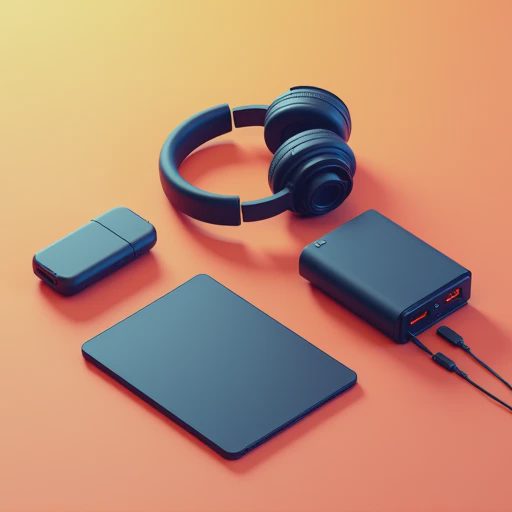
The headphones that sound clear on calls and stay comfortable for an hour, even if they do not have the most advanced ANC.
The monitor that is easy to read in your actual light and sits at a height that does not wreck your neck, even if the contrast ratio is not class-leading.
The charger that tops up your laptop and phone without drama and fits in the bag, even if it is not the highest-wattage brick on the market.
The tablet that is pleasant for reading and light travel use, even if it is not positioned as a laptop replacement.
In each case the “better” option exists. The question is whether the improvement changes your week enough to justify the difference in price, complexity, or opportunity cost.
Why the best version is often the wrong target
The market is structured to make the top option feel necessary. Spec sheets expand. Review rankings create a ladder. Marketing implies that anything below the current flagship is a compromise. For enthusiasts who enjoy the ladder, that framing is fine. For everyone else it creates a quiet pressure to keep climbing past the point of diminishing returns.
I have owned the “best” version of several categories. Some of them earned the premium. Many of them delivered a better story and only a small practical difference once the novelty faded. The extra money could have solved a different friction or simply stayed in the budget.
The smarter target is the point where additional spending stops buying meaningful improvement in the situations you actually live in. That point is almost never the top of the chart.
How I find the useful version of good enough
I start with the job, not the category leader.
List the three things the product must do well in your real environment.
Not the full feature list. The three that will decide whether you still like it in two weeks.Ignore everything that does not affect those three.
Higher peak brightness, an extra mode, a slightly faster chip, or a more premium finish only matter if they change one of the things on the short list.Choose the least expensive option that clears the bar with room to spare.
Not the one that barely scrapes by. The one that feels solid and then leaves you alone. That is the version that tends to stay in rotation.
This approach is not anti-quality. It is anti-waste. It treats money and attention as limited resources that should be spent where they produce the most usable improvement.
The quiet advantage
When you consistently buy the strong version of good enough, several things happen:
You spend less time researching and second-guessing.
You replace devices less often because the current one is not constantly being compared to a newer ideal.
You free up budget and mental space for the purchases that actually remove friction.
You get more comfortable saying “this is enough” without feeling like you failed an optimization test.
That last part is underrated. A lot of unnecessary upgrading is driven by the low-level discomfort of owning something that the internet has already labeled second-tier. Good enough, chosen clearly, removes that discomfort.
A simple test
Before you buy the higher-priced option, finish this sentence:
“The extra money is worth it because it will change ___ in my actual week.”
If you cannot fill in the blank with something specific and recurring, you are probably looking at a better story rather than a better tool. In that case the smarter purchase is the one that already clears the bar.
Buy the version of the product you’ll still like after the excitement wears off. More often than not, that version is the solid, well-chosen good enough—not the one that wins the comparison table. The best decision is usually the one that solves the real problem and then stops consuming attention.


No comments yet — be the first to share a thought.